
Junkanoo: what it is and how to experience it in The Bahamas
Junkanoo is the cultural heartbeat of The Bahamas: a parade of music, dance and towering costumes that fills Bay Street in Nassau in the small hours of Boxing Day and New Year's Day. It is loud, long, competitive and unlike anything else in the Caribbean. Here is what it is, where it comes from and how to see it well.
By BahamasBooking editorial team. Updated . 2 minute read.
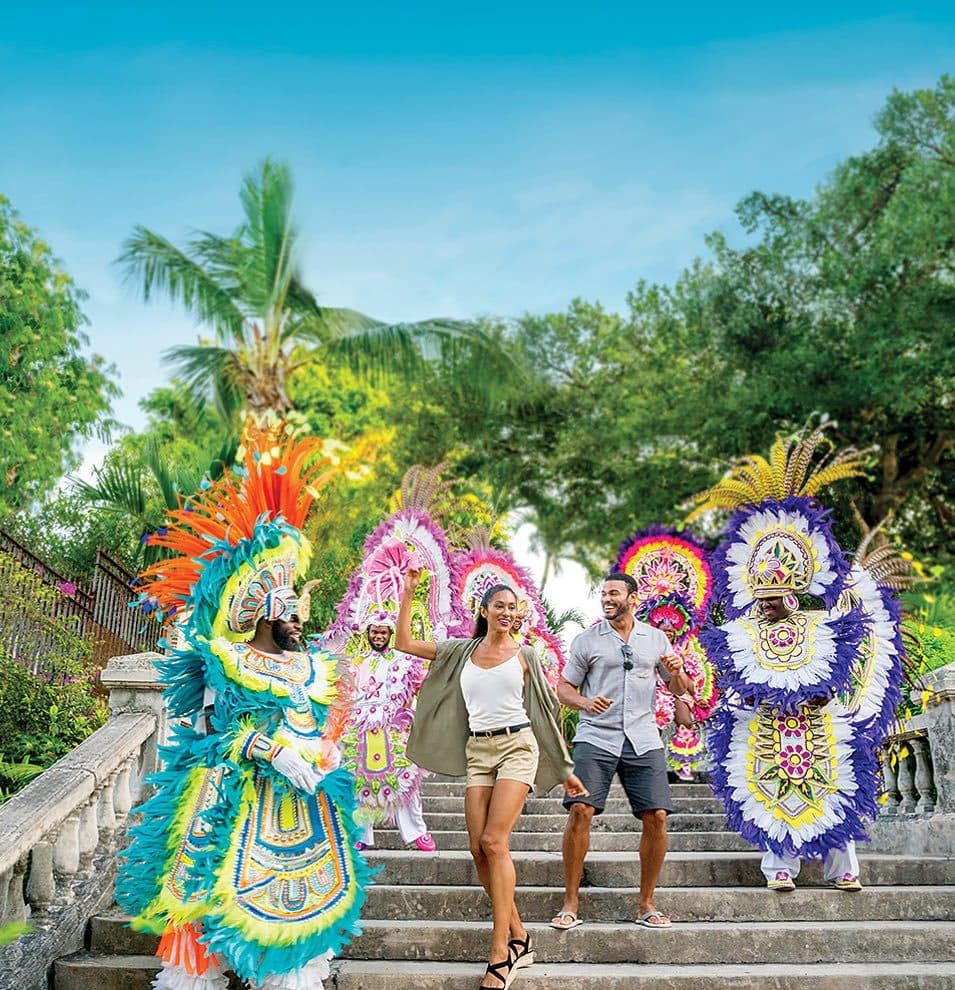
Origins
Junkanoo's roots lie in the celebrations of enslaved Africans in the colonial Bahamas, who were given time off around Christmas and marked it with music, masks and dance drawn from West African traditions. The name is most often linked to John Canoe, variously described as a West African leader or a figure in similar festivals elsewhere in the Caribbean, though its origin is debated. Over two centuries the festival evolved from informal street celebrations into the organised, judged parades of today, and it is now recognised as the country's defining cultural expression.
The music and the costumes
A Junkanoo group is a moving orchestra. Goatskin drums, heated over fires to tighten the skins, carry the rhythm; cowbells, shaken in pairs, give the characteristic ringing; whistles, horns and a full brass section layer melody on top. Groups range from a few dozen members to more than a thousand, divided into sections of musicians, dancers and costume bearers.
The costumes are built over months in workshops known as shacks, by hand, from cardboard, wire and crepe paper fringed and glued in intricate patterns. Each group chooses a theme for the year and keeps it secret until the parade. Lead costumes can tower several metres high and are carried, not worn, by a single person.
The parades
The two national parades take place in downtown Nassau on Boxing Day, 26 December, and New Year's Day. They begin in the early hours of the morning, often around 1 or 2 a.m., and continue past dawn as each group makes its way along Bay Street and back. Groups are judged on music, costume and dance, and the rivalry between the major groups is intense and good-natured. Results are a matter of national conversation for weeks.
Smaller Junkanoo parades take place on other islands around the holidays, and summer Junkanoo events bring the music out of season. In Nassau, year-round Junkanoo experiences include visits to the shacks where costumes are made, museum displays and performances arranged for events and cruise passengers.
How to see it well
Bleacher seating along Bay Street is ticketed and sells out; general viewing along the route is free but crowded. Dress for a cool night and a long one, and plan how you will get back to your hotel in the early hours when taxis are scarce. The atmosphere is festive and family-friendly, and visitors are welcome.
If you cannot be in Nassau on the parade dates, a Junkanoo rush-out at a wedding or private event, or a workshop visit, is the next best way to experience the music up close. Groups and smaller troupes perform at events throughout the year, mainly in Nassau and on Paradise Island.
- Boxing Day (26 December) and New Year's Day, downtown Nassau, from the early hours
- Bleacher seats are ticketed; arrange them in advance
- Expect cold for the climate, noise and a long night
- Year-round: shack visits, workshops and private performances
Want help turning this into a plan?
Send us your dates and the islands you are considering. We reply with a realistic route and real options, free of charge.